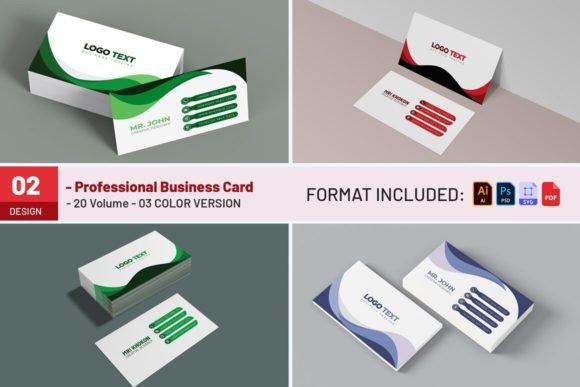
Elevating Professional Identity with Modern Business Cards Template Designs
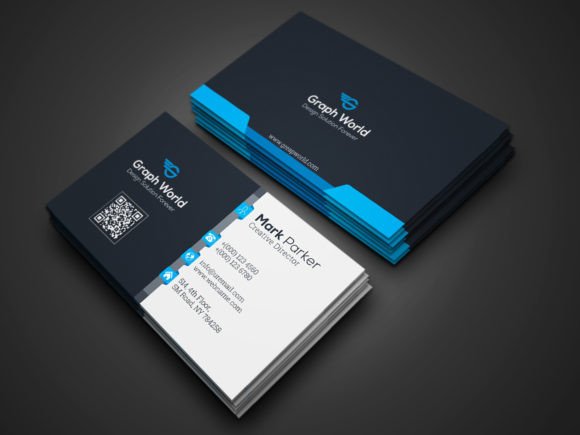
In an era dominated by digital communication, the tangible impact of a physical business card remains surprisingly potent. It is often the first physical touchpoint between professionals, serving as a miniature billboard for your brand identity. However, creating a card that stands out in a stack of generic prints requires more than just a name and a phone number. This is where a Modern Business Cards Template becomes an indispensable tool for designers, entrepreneurs, and corporate branding teams alike. By leveraging pre-designed, high-quality structures, you can ensure that your final product is not only visually striking but also technically perfect for professional printing.
The Strategic Value of Pre-Designed Formats
Many individuals underestimate the complexity of print design. What appears simple on a screen can become a nightmare when sent to a printer if the technical specifications are incorrect. A robust Modern Business Cards Template solves this problem by providing a foundation that is already optimized for production. When you choose a template that includes comprehensive file formats, you are essentially future-proofing your design workflow.
Consider the versatility required in today’s multi-platform environment. You might need to edit the core design in Adobe Illustrator for vector precision, make quick text changes in Photoshop, or share a proof with a client via PDF. Having access to a volume of 20 unique designs, each available in Illustrator Ai, Illustrator EPS, Photoshop PSD, Adobe Acrobat PDF, and SVG, means you are never locked into a single software ecosystem. This flexibility is crucial for agencies handling multiple clients with different preference sets or for freelancers who switch between tools depending on the project's specific needs.
Understanding Technical Specifications: DPI and Color Modes
One of the most common pitfalls in DIY business card design is ignoring the technical requirements of offset or digital printing. A design that looks vibrant on a backlit monitor can appear dull and muddy when printed if the color mode is incorrect. High-quality templates address this by utilizing the CMYK color mode. Unlike RGB, which is designed for screens, CMYK (Cyan, Magenta, Yellow, and Key/Black) is the standard for four-color process printing. Ensuring your Modern Business Cards Template is set to CMYK guarantees that the colors you see during the design phase closely match the final printed output.
Furthermore, resolution is non-negotiable. Standard web images are often 72 DPI (dots per inch), which is insufficient for print. Professional templates are crafted at 300 DPI, ensuring that text remains crisp, logos stay sharp, and graphics do not pixelate. This level of detail is what separates an amateur handout from a premium networking tool. When you download a main file with these specifications already configured, you eliminate the guesswork and reduce the risk of costly reprinting errors.
Design Versatility and Customization Ease
The modern aesthetic is not monolithic; it ranges from minimalist clean lines to bold, typographic statements. A collection offering 20 unique designs allows users to select a style that aligns perfectly with their industry. For instance, a lawyer might prefer a structured, serif-heavy layout found in one of the templates, while a graphic designer might opt for a more abstract, sans-serif composition from another. The key advantage here is the ability to maintain uniqueness without starting from scratch.
Customization is streamlined through the inclusion of all font links. One of the most frustrating aspects of using third-party templates is discovering that the designer used a proprietary or obscure font that you do not have licensed. By specifying that all fonts are free to use and linking directly to Google Fonts, these templates remove legal and logistical barriers. Google Fonts are widely accessible, web-safe, and generally free for commercial use, making the transition from template to final design seamless. You can download the necessary typefaces instantly, install them, and begin editing without hunting for licenses or purchasing expensive type families.
The Importance of Standard and Unique Sizes
While the standard business card size of 3.5x2 inches is the global norm, fitting easily into wallets and cardholders, modern branding sometimes calls for deviation. Some templates may offer variations or bleed areas that allow for creative cuts or rounded corners. Understanding the dimensions included in your Modern Business Cards Template package is vital. The 3.5x2 inch format is safe and recognizable, but the way elements are arranged within that space can dramatically alter perception.
Proper bleed settings are also part of this dimensional consideration. Professional templates include bleed areas—extra space around the edge of the design that gets trimmed off after printing. This ensures that there are no unwanted white borders if the cutting machine shifts slightly. By using a template that accounts for these 0.125-inch bleeds on all sides, you guarantee a polished, edge-to-edge finish that exudes quality.
Integrating Templates into Modern Workflows
For marketing teams and solo entrepreneurs, time is a scarce resource. Designing a business card from zero involves sketching, vectorizing, typesetting, and technical prep. Using a Modern Business Cards Template condenses this process significantly. You can go from concept to print-ready file in a fraction of the time. This efficiency does not come at the cost of quality; rather, it leverages the expertise of professional designers who have already solved the layout and balance issues.
Moreover, these templates facilitate consistency across brand materials. If you are launching a new startup, you can use the same design language from your business cards on your letterheads, social media headers, and email signatures. The SVG format included in these packages is particularly useful for digital adaptation, as scalable vectors look perfect on any screen size without losing clarity. This cross-medium consistency strengthens brand recognition and trust.
Practical Considerations for Selection
When selecting a template from a volume of 20, consider your target audience. Who will be receiving this card? If you are in a creative field, you might prioritize templates with bold color blocks and unconventional layouts. For corporate sectors, look for designs with ample white space and traditional hierarchy. The availability of both Illustrator EPS and PSD files means you can choose the workflow that suits your skill set. If you are comfortable with layers and masks, Photoshop offers powerful photo integration capabilities. If you prefer precise vector control and scalability, Illustrator is the superior choice.
It is also worth noting the value of the Adobe Acrobat PDF inclusion. PDFs are universal. They allow you to send proofs to clients or printers who may not have Adobe Creative Cloud installed. A print-ready PDF embedded with the correct CMYK profiles and 300 DPI resolution serves as the final handshake between your design and the printing press. It ensures that what you approve is exactly what gets produced.
Final Thoughts on Professional Presentation
Your business card is an extension of your professional persona. It communicates attention to detail, aesthetic sensibility, and respect for the recipient. By utilizing a high-quality Modern Business Cards Template, you invest in that perception. The combination of technical precision (300 DPI, CMYK), format versatility (Ai, EPS, PSD, PDF, SVG), and user-friendly customization (Google Fonts, clear layer organization) creates a powerful toolkit for anyone looking to make a lasting impression.
Whether you are rebranding an existing company or launching a new venture, the right template provides the structural integrity needed to showcase your content effectively. It allows you to focus on the message—who you are and what you do—while the design framework handles the visual heavy lifting. In the competitive landscape of modern business, such efficiencies and quality assurances are not just helpful; they are essential.