Strategic Branding: The Power of the Letter Initial M Shopping Cart Line Logo in Modern E-Commerce
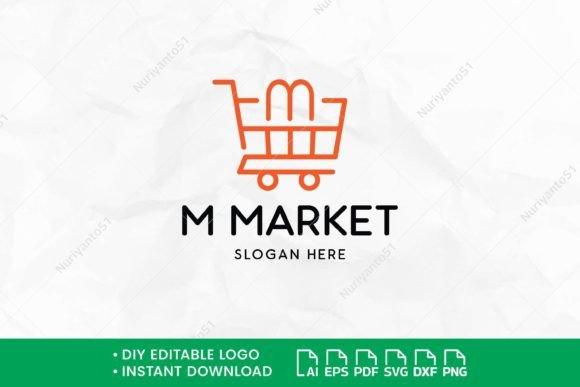
In the hyper-competitive landscape of digital retail, visual identity is no longer merely a decorative element; it is a critical component of user experience and brand recognition. As online marketplaces, supermarkets, and boutique stores vie for consumer attention, the demand for clean, scalable, and instantly recognizable branding has never been higher. This shift has propelled minimalist design principles to the forefront of corporate identity strategies. Among the most effective tools in this arena is the Letter Initial M Shopping Cart Line Logo, a design template that merges typographic precision with universal e-commerce symbolism.
This article explores the strategic value of utilizing a Letter Initial M Shopping Cart Trolley in Minimalist Line Style for online retail businesses. We will examine why this specific aesthetic resonates with modern consumers, how editable vector templates streamline the workflow for entrepreneurs and designers, and the broader industry trends driving the adoption of such streamlined visual assets.
The Evolution of Minimalism in Retail Identity
The transition from complex, illustrative logos to simplified, line-based icons reflects a broader change in how consumers interact with brands. In an era dominated by mobile devices and rapid scrolling, clarity is paramount. A minimalist line style ensures that a logo remains legible whether it is displayed on a massive billboard or as a tiny favicon in a browser tab. The Letter Initial M Shopping Cart Line Logo exemplifies this principle by stripping away unnecessary details, focusing instead on the essential geometry of the letter "M" and the shopping cart.
This reductionist approach is not just an aesthetic choice; it is a functional necessity. Modern web design prioritizes speed and ease of navigation. Heavy, detailed graphics can slow down load times and clutter interfaces. By adopting a lightweight, vector-based logo, businesses ensure that their branding integrates seamlessly into responsive web designs. The clean lines of the shopping cart trolley icon communicate efficiency and modernity, qualities that today’s shoppers associate with reliable service and streamlined checkout processes.
Why the "M" and the Cart? Symbolism and Semiotics
Combining a initial letter with a industry-specific icon creates a powerful semiotic shortcut. For businesses whose names begin with "M"—such as Market, Mart, MegaStore, or ModernShop—the integration of the letter into the shopping cart structure creates an immediate cognitive link between the brand identity and its function. The Letter Initial M Shopping Cart Trolley serves as a visual anchor, reinforcing the core business activity: commerce.
The shopping cart is perhaps the most universally recognized symbol of online retail. When fused with a custom initial, it transforms a generic icon into a proprietary asset. This duality allows the logo to function on two levels: it identifies the specific brand through the typography while simultaneously categorizing the business within the retail sector through the iconography. This dual communication is essential for new market entrants who need to establish trust and clarity quickly.
The Practical Advantage of Editable Vector Templates
For freelancers, marketing agencies, and startup founders, time is a scarce resource. Custom logo design from scratch can be prohibitively expensive and time-consuming. This is where the value of a high-quality, editable logo template becomes evident. The Letter Initial M Shopping Cart Line Logo template is designed to bridge the gap between professional quality and accessibility.
These templates are typically delivered as comprehensive ZIP files containing multiple formats, including AI (Adobe Illustrator), EPS, SVG, PDF, DXF, PNG, and JPG. The inclusion of 100% vector files is crucial. Unlike raster images, vectors are mathematically defined paths, meaning they are infinitely scalable without any loss of quality. Whether you are printing business cards, designing packaging, or creating large-format signage, the logo remains crisp and professional.
Key Technical Features for Professional Use
- Scalability and Resolution: With a canvas size of 3000x2000 pixels at 300 DPI, the template ensures print-ready quality for various marketing materials.
- Color Flexibility: Provided in CMYK color mode, the files are optimized for professional printing, while also being easily convertible to RGB for digital screens.
- Editable Text and Layers: Organized layers allow designers to isolate elements easily. The text is fully editable, enabling businesses to replace the placeholder "M" or adjust the company name to fit their specific branding guidelines.
- Format Versatility: The inclusion of SVG and DXF files makes the logo compatible with web development frameworks and even cutting machines for physical merchandise, expanding its utility beyond digital screens.
By providing these technical specifications, the template empowers users to maintain full control over their brand identity. You can open the files in Adobe Illustrator or other graphic software to change colors, fonts, and layouts to align perfectly with your corporate palette. This level of customization ensures that the final logo feels bespoke, despite originating from a template.
Aligning with Contemporary Workflow Needs
The modern creative workflow is increasingly collaborative and iterative. Startups often pivot their branding several times before finding the right fit. Having access to a source file that is easy to modify reduces the friction associated with rebranding. If a business decides to shift from a blue color scheme to a green one to emphasize sustainability, an editable vector template allows for this change in minutes rather than days.
Furthermore, the rise of DIY entrepreneurship has created a demographic of business owners who are not professional designers but possess a keen eye for quality. They require tools that are robust enough to produce professional results but intuitive enough to use without extensive training. The recommendation to open PDF format for best editable text results is a practical tip that highlights the user-friendly nature of these assets. It lowers the barrier to entry, allowing non-designers to achieve polished outcomes.
Broader Industry Trends: Sustainability and Digital Efficiency
The preference for minimalist line art also intersects with the growing emphasis on sustainability in design. Digital minimalism reduces data usage, contributing to lower energy consumption during data transmission. While seemingly negligible on an individual level, optimized assets across millions of websites contribute to a smaller digital carbon footprint. Additionally, the clean, uncluttered aesthetic of the Letter Initial M Shopping Cart Line Logo aligns with the "less is more" philosophy that permeates modern lifestyle and consumer trends.
Consumers are increasingly drawn to brands that project transparency and simplicity. A cluttered logo can subconsciously signal complexity or hidden costs. In contrast, a clean, linear design suggests honesty and straightforwardness. For online supermarkets and retail shops, this psychological cue can influence purchasing behavior, fostering a sense of trust and reliability.
Implementation Strategies for Entrepreneurs
To maximize the impact of this logo template, businesses should consider its application across all touchpoints. Consistency is key to building brand equity. Here are practical steps for implementation:
- Digital Presence: Use the SVG format for your website header and footer to ensure sharp rendering on high-resolution displays. Utilize the transparent PNG for social media profile pictures and overlays.
- Print Materials: Leverage the CMYK AI or EPS files for business cards, flyers, and packaging. Ensure that the line weight is sufficient for small-scale printing to maintain legibility.
- Merchandising: If your brand plans to sell branded merchandise, the DXF file can be used with cutting plotters to create vinyl decals or embroidery patterns, extending your brand reach into the physical world.
- Color Adaptation: Test the logo in monochrome. A strong line logo should work effectively in black and white, ensuring versatility for faxed documents, embossed seals, or single-color promotional items.
It is also important to note the support structure provided with such templates. The inclusion of a README file with font names and download links ensures that typography remains consistent. If specific formats are missing or if customization assistance is needed, direct communication with the provider offers a safety net, ensuring that technical hurdles do not impede the branding process.
Conclusion: Investing in Visual Clarity
In the dynamic world of e-commerce, your logo is often the first interaction a customer has with your brand. The Letter Initial M Shopping Cart Line Logo offers a sophisticated, efficient, and adaptable solution for businesses looking to establish a strong visual presence. By combining the universality of the shopping cart symbol with the personalization of a custom initial, this minimalist design template addresses the core needs of modern retail branding: clarity, scalability, and professionalism.
As technology continues to evolve and consumer expectations shift towards faster, cleaner digital experiences, the value of optimized, vector-based branding assets will only increase. For professionals, creators, and entrepreneurs, investing in a high-quality, editable logo template is not just a cost-saving measure; it is a strategic decision that lays the foundation for a cohesive and compelling brand identity. By embracing these tools, businesses can focus less on the mechanics of design and more on the art of connection, ensuring their place in the competitive online marketplace.